

Mental Wellness Tips for Seniors: Stay Sharp & Engaged
Healthy Aging, Mental Wellness
Keeping the Mind Active and Engaged in the Golden Years
Staying mentally active is just as important as staying physically fit, especially for older adults. With a few simple, enjoyable habits, seniors can keep their minds sharp, spirits lifted, and days filled with meaning and connection.
Stay Curious at Every Age
Simple daily moments that keep the mind active and the heart connected
Everyday Activities That Keep the Brain Busy
Mental exercise does not have to be complicated. Many familiar activities gently challenge the brain, support memory, and bring real enjoyment. The key is variety and doing a little bit, most days of the week.
Reading to Explore New Worlds
Reading books, magazines, newspapers, or even short articles online keeps the mind engaged with new ideas and stories. Seniors might enjoy:
Novels that spark imagination and empathy for different characters and places
Biographies that inspire reflection on life experiences and values
Short articles about history, travel, or health to learn something new each day
💡 Pro Tip: For those with vision changes, large-print books or audiobooks make reading more comfortable and enjoyable.
Puzzles and Games That Challenge the Mind
Puzzles are a classic way to keep the brain active. They encourage problem-solving, attention to detail, and patience. Popular options include:
Crosswords and word searches that support language skills and recall of names and facts
Number puzzles such as Sudoku for logical thinking and concentration
Jigsaw puzzles and simple board or card games that can also be enjoyed with family or caregivers
Music, Memories, and Creative Hobbies
Music and creativity offer powerful ways to stimulate the mind and lift mood. Listening to favorite songs can bring back memories, while singing along or gently moving to the rhythm adds physical engagement. Seniors can also benefit from:
Learning or revisiting an instrument, even for a few minutes a day
Arts and crafts such as drawing, painting, knitting, or scrapbooking to express creativity and practice fine motor skills
Writing in a journal, recording family stories, or organizing photo albums to keep memories alive and organized
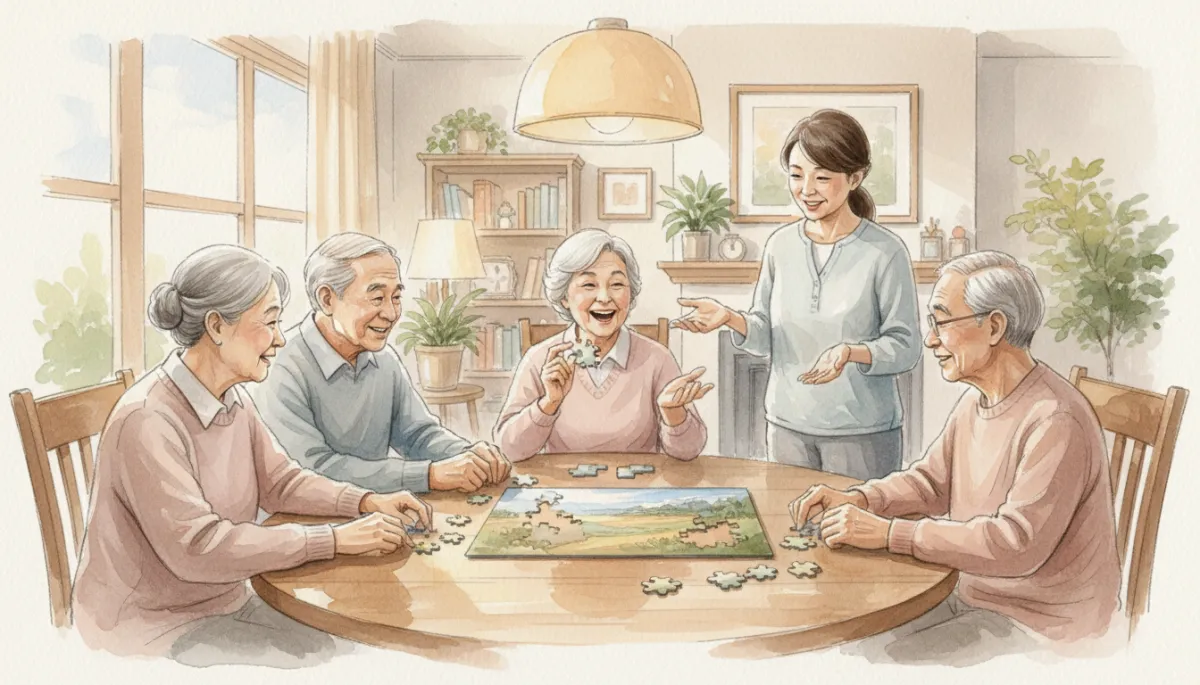
Shared activities like puzzles combine mental exercise with meaningful social connection.
The Power of Social Interaction for a Healthy Mind
Staying mentally active is not only about solo activities. Social interaction is one of the most powerful brain boosters for seniors. Conversations, laughter, and shared experiences give the mind a healthy workout and protect against loneliness and isolation.
Conversations, Calls, and Quality Time
Simple, everyday interactions can make a big difference. Talking about the day’s events, discussing a TV show, or reminiscing about the past all encourage memory, attention, and emotional connection. Helpful habits include:
Regular phone or video calls with family and friends to share news and stay involved in loved ones’ lives
Scheduled chats with grandchildren where they show school projects or read a short story together
Group activities at senior centers, faith communities, or clubs when possible, to meet new people and share interests
The Special Role of Caregivers and Companions
Caregivers, whether family members or professionals, play a vital role in keeping seniors mentally engaged. Beyond helping with daily tasks, they can:
Encourage conversation by asking open-ended questions and truly listening to stories and opinions
Join in activities such as reading aloud, playing games, cooking together, or looking through photo albums
Help seniors stay connected with others by arranging calls, visits, or online gatherings
📌 Key Takeaway: Social interaction is not a luxury—it is an essential part of keeping the mind active, resilient, and hopeful.
How Mental Engagement Supports Healthy Aging
Research suggests that regular mental activity and social connection can help support brain health as we age. While no activity can completely prevent changes in memory, staying engaged offers several important benefits:
Sharper thinking: Challenging the brain helps maintain attention, problem-solving skills, and mental flexibility in daily life.
Emotional well-being: Enjoyable activities and relationships reduce stress, support better sleep, and improve overall mood.
Sense of purpose: Learning, creating, and sharing memories remind seniors that their experiences and talents still matter deeply.
Mental engagement works best when it is enjoyable and tailored to each person’s interests and abilities. Even small steps—one puzzle, one song, one conversation—can add up to a healthier, more fulfilling life over time.
Making Mental Fitness Part of Every Day
Keeping the mind active and engaged does not require a strict schedule. Instead, think of it as sprinkling moments of curiosity, creativity, and connection throughout the day. A chapter of a book in the morning, a phone call in the afternoon, music or a game in the evening—together, these habits nurture both brain and heart.
With the support of loved ones and caregivers, seniors can continue to learn, share, and thrive at every age. Mental engagement is not only good for the brain—it is a beautiful way to celebrate a lifetime of experience and keep writing new chapters.