Home Care for Young Adults
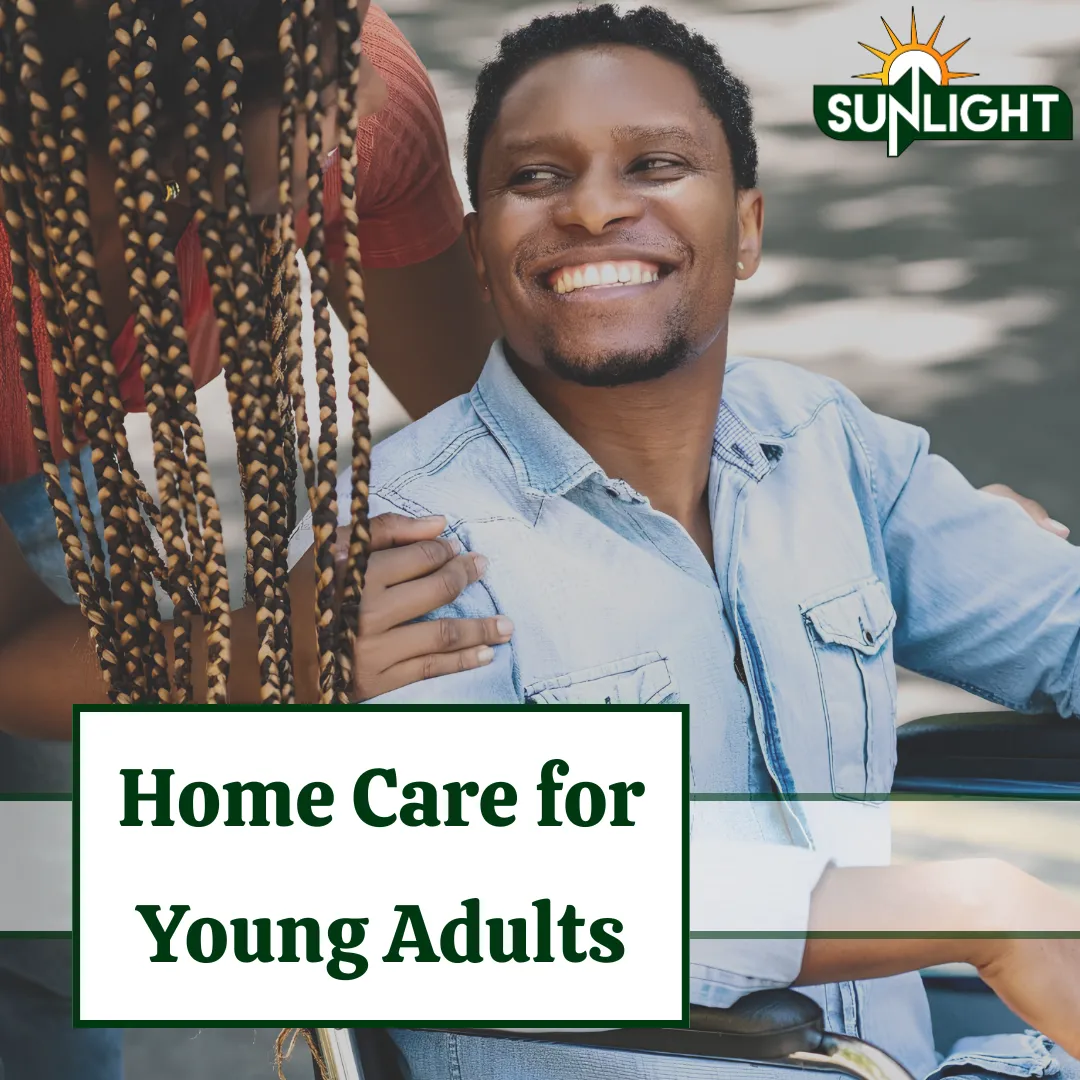
Home care provides care to an individual in their home based on their needs. Home health care provides skilled nursing typically following a hospital discharge. Non-medical home care is intended to assist individuals that have difficulty completing activities of daily living (ADLs). While it is common for seniors to utilize home care, it is not just for older people. Individuals with disabilities, chronic illnesses, or injuries can also qualify for home care.
Disability, Chronic Illness, or Injury
Disabilities
According to the CDC, a disability is any condition of the body or mind that makes it more difficult for the person with the condition to do certain activities and interact with the world around them. 23% of adults below the age of 65 have a disability, with over 37% of adults having a disability that can create significant difficulty completing ADLs. Disabilities can affect:
Cognitive function
Mobility
Independent living
Hearing
Vision
Self-care
Chronic Illness
In 2019, 53.8% of adults aged 18─34 years had at least one chronic condition, and 22.3% had more than one condition. Chronic illness can become debilitating as a result of symptoms or treatment. It is important to stay active and eat healthy as often as possible when facing an illness, and that can become difficult without assistance.
Injury
In the United States, around 6% of adults experience an activity-limiting injury every 3 months. Injuries most commonly occur in workplaces or involve motor vehicles. An unfortunate number of these accidents result in death, but those that do not can still be incredibly serious. The injuries sustained can cause difficulty for the individual for a temporary recovery period, but a large number of them cause life-long challenges. About 21 million people are treated and released from emergency departments with nonfatal injuries each year. Studies show that 80% of workers injured return to work within 3 months.
What Home Care Looks Like for Younger Adults
What is Home Care?
Home care is assistance with everyday tasks when the individual is unable to complete them on their own, or with extreme difficulty. ADLS can include a wide range of activities such as:
Personal Care (bathing, grooming, dressing)
Mobility (assistance in or out of bed, getting from one place to another with a walker or wheelchair)
Transportation (errands, appointments, social outings)
Homemaking (meal preparation, light housekeeping)
Companionship (conversation, activities)
Home care can very often be covered by insurance or government programs to people with disabilities, illness, injuries, or old age.
Sunlight Senior Care accepts:
Medicaid Waivers
VA Benefits
Long-term Care Insurance
Private Pay
Sunlight Home Medical accepts:
Most insurances (doctor’s orders required)
Home care can be short-term or long-term depending on the care needed. Most injuries will require home care for a recovery period, but for disabilities or chronic illness, home care could be an ongoing requirement.
Feeling Independent with Home Care
It is common to believe that using home care makes you dependent or reliant. Especially for a younger adult when there is the misconception that home care is just for the elderly. The reality is that home care keeps you independent.
Caregivers are trained to handle visits with respect to both the client, family and the home. Their purpose is to listen and execute tasks as close to your standards as they can. The values of Sunlight promote this with them being:
Communication
Accountability
Respect
Empathy
Safety
Home care exists with the belief that everyone deserves to live their life, and we provide the services that allow you to do that.