
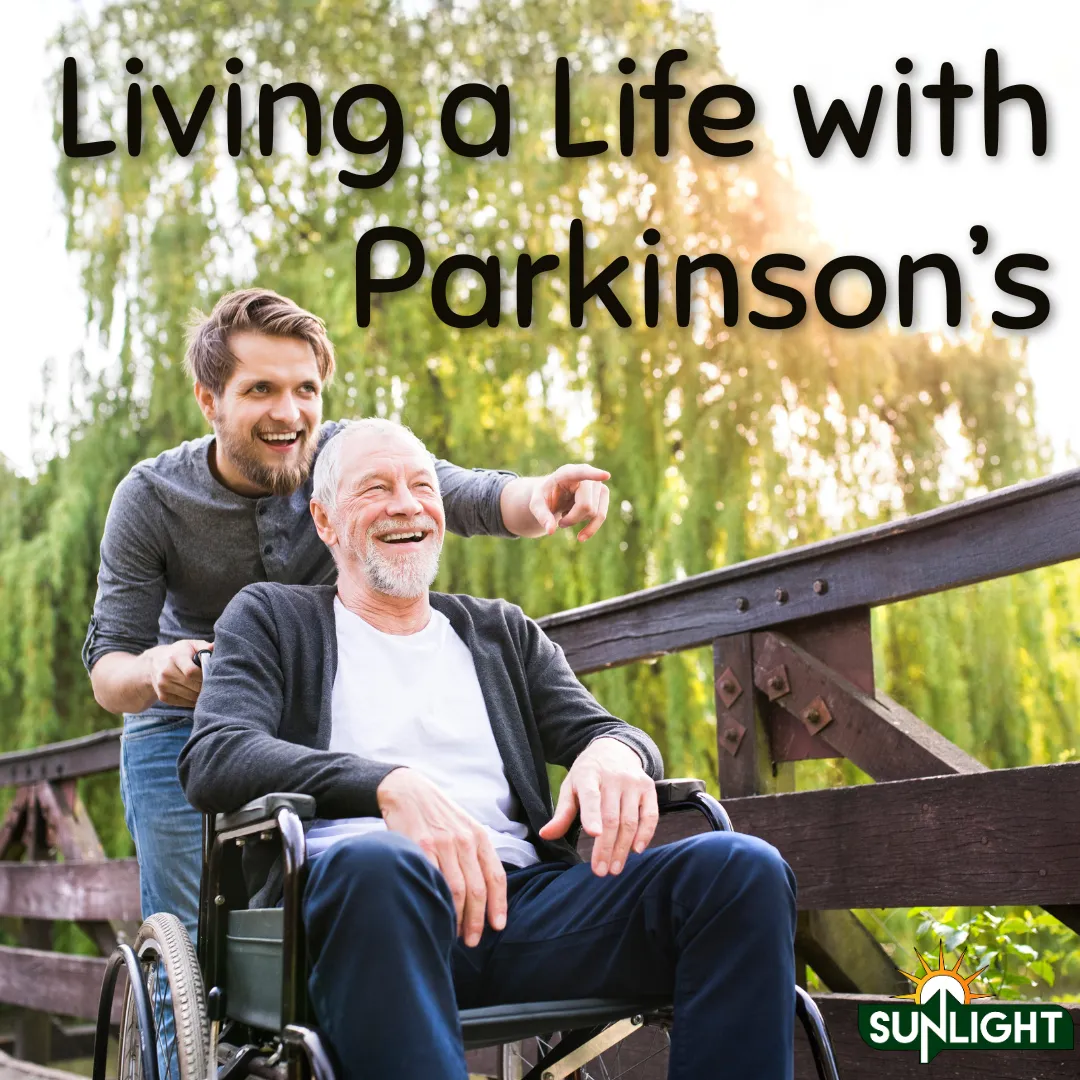
Living a Life with Parkinson's
April is Parkinson's Awareness Month! Parkinson’s disease affects more than 1.1 million people in the U.S. and nearly 90,000 people are newly diagnosed each year. This is why it is important we bring awareness and education surrounding Parkinson's disease.
Living with Parkinson's Disease comes with its own unique difficulties. Though Parkinson's makes a multitude of things in life challenging, there are ways to manage and live an enjoyable life.
Parkinson's disease is a progressive movement disorder of the nervous system. It causes nerve cells in parts of the brain to weaken, become damaged, and die, leading to symptoms that include problems with movement, tremor, stiffness, and impaired balance (“Parkinson’s Disease”).
Early Signs
Contrary to what most people may believe, the first signs of Parkinson's disease are often non-motor, meaning they do not affect movement. These often include:
Depression
Constipation
Loss of Smell
Sleep Disorders
This collection of symptoms has become known as "Pre-motor Parksinon's" as a term for the early stage of the disease. It is known that these symptoms are often observed in many people without Parkinson’s, so just because you have one or more of these symptoms, it does not mean you should panic (Gilbert).
What comes next are the motor symptoms more commonly associated with Parkinson’s. This is typically when people seek medical help and receive a diagnosis. Since there is no one test used to diagnose Parkinson’s, these symptoms are often used in the diagnosis process (“Parkinson’s Disease - Diagnosis and Treatment - Mayo Clinic”).
Some of the most common motor symptoms include:
Tremors
Slowed Movement
Rigid Muscles
Poor Posture and Balance
Loss of Automatic Movements
Speech Changes
Writing Changes
Motor symptoms with Parkinson’s are often worse on one side of the body compared to the other, and they will typically start on one side before both (“Parkinson’s Disease - Symptoms and Causes”).
Daily Life with Parkinson’s
Receiving a Parkinson’s diagnosis can be scary. You may not know what to do with yourself. The answer is more simple than you would think: live. Parkinson’s currently has no cure, but it is manageable through the use of medications and individual efforts.
Some of the efforts you can put forth on your own are:
Set Goals
Give yourself motivation to live well by setting clear, obtainable goals. These goals can be in any aspect of your life. It can be a fitness goal, a skill, travel, building a habit, or anything else that inspires you everyday.
Build your Care Team
Having Parkinson’s disease can mean needing a specialist to give you the best care. Neurologists have expertise on brain and central nervous system conditions like Parkinson’s. For managing daily life, you may want to find a caregiver with specialized training in managing Parkinson’s like what we offer here at Sunlight Senior Care. Other professionals used in managing Parkinson’s can include physical therapists, sleep specialists, and speech therapists.
Have Support
Living with Parkinson’s is not easy, and can often lead to depression and anxiety. This is why having a strong support system is key to making daily life manageable. Family and friends are a great source of support in everyday life. It can also be beneficial to have a Parkinson’s support group locally or online to have others that understand what you’re going through. Keeping your mental health managed is a reason to consider someone like a therapist or counselor as well.
Create Healthy Habits
As with any advice for living well, healthy habits are vital. Staggering amounts of evidence shows that exercise is essential to managing Parkinson’s disease. Regular physical activity can improve many Parkinson’s symptoms and also offer a neuroprotective effect. Restful sleep is especially important for people with Parkinson’s. Getting enough sleep is key to managing mood, health and symptoms. Create a sleep strategy that includes a regular sleep schedule and bedtime routine to ensure adequate rest (“5 Steps to Living Well”).
Life will be hard, but it won’t stop being worth living. Adapting to Parkinson’s is doable with the overwhelming amount of resources available. Research is always being done to further the understanding and treatment of the disease.
We at Sunlight are here to support you every day so you can be the best you can be. Our specific Parkinson’s Care will help you feel confident and comfortable to do what you want. Let us know how we can be your support today!
Works Cited
“5 Steps to Living Well.” Parkinson’s Foundation, 2017, www.parkinson.org/living-with-parkinsons/new-to-parkinsons/5-steps. Accessed 10 Mar. 2026.
Gilbert, Rebecca. “What Are the First Symptoms of Parkinson’s Disease?” American Parkinson Disease Association, 18 Mar. 2025, www.apdaparkinson.org/article/first-symptoms-of-parkinsons/?gad_source=1&gad_campaignid=23266119242&gbraid=0AAAAAD3etea56GY-bS-sTpUeFjpeRWmjH&gclid=Cj0KCQjwgr_NBhDFARIsAHiUWr7fpT1kMtesTh5fyhgqpvbtieIabEjti-9ibe7sPEghU8K-0COHRKsaAtlVEALw_wcB. Accessed 10 Mar. 2026.
“Parkinson’s Disease.” National Institute of Neurological Disorders and Stroke, 2025, www.ninds.nih.gov/health-information/disorders/parkinsons-disease. Accessed 10 Mar. 2026.
“Parkinson’s Disease - Diagnosis and Treatment - Mayo Clinic.” Mayoclinic.org, 2025, www.mayoclinic.org/diseases-conditions/parkinsons-disease/diagnosis-treatment/drc-20376062. Accessed 10 Mar. 2026.
“Parkinson’s Disease - Symptoms and Causes.” Mayo Clinic, 2025, www.mayoclinic.org/diseases-conditions/parkinsons-disease/symptoms-causes/syc-20376055. Accessed 10 Mar. 2026.