Medical or Non-Medical Home Care
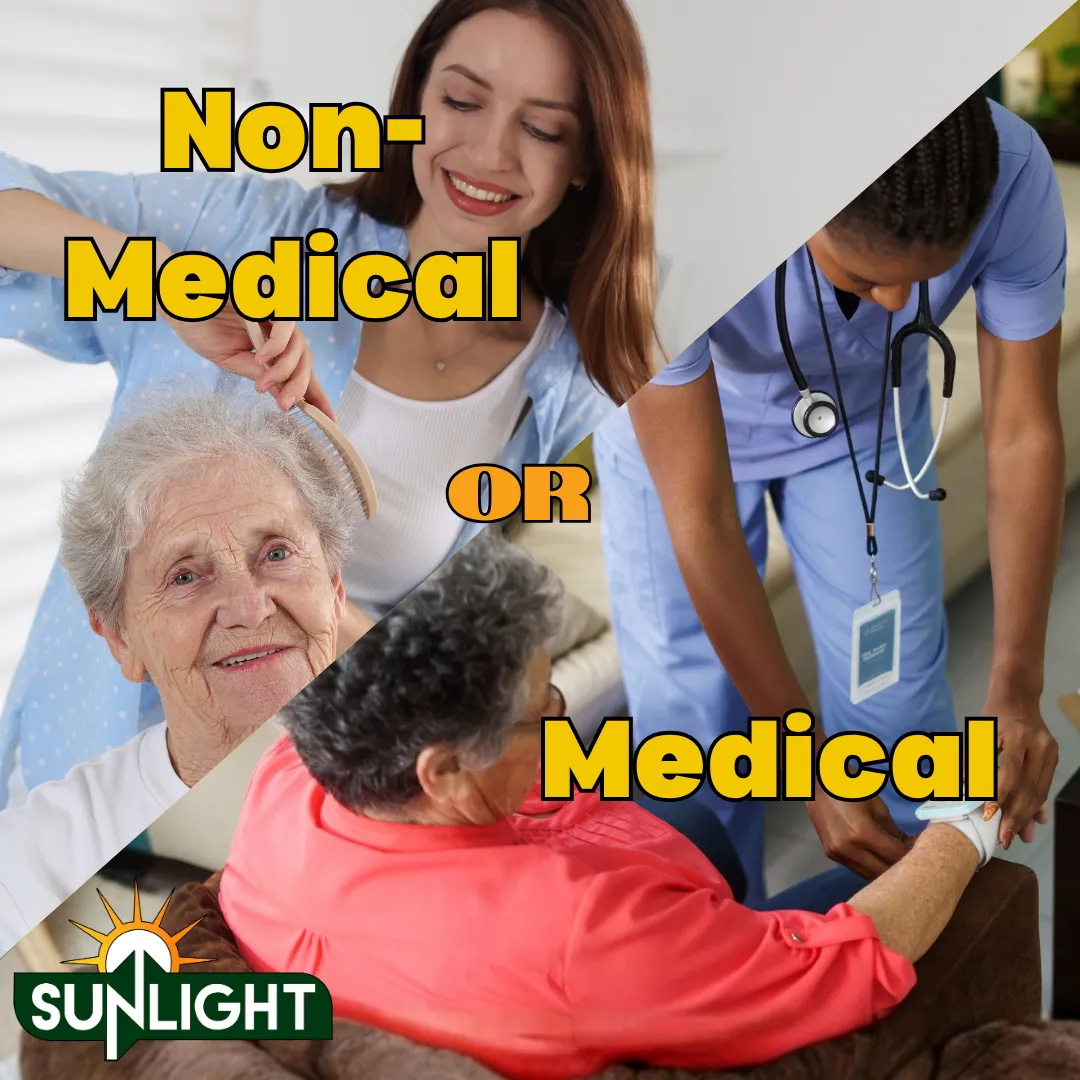
One of the biggest factors in looking for home care is knowing if you need medical or non-medical care. For some it may feel obvious, and for others that may cause confusion over what is considered “medical” or not. It may also cause confusion because non-medical care can also be used by individuals with a medical condition or injury. The reality is that some individuals may use both services at once, may use each at a different time, or may only need one.
Differences Between Medical and Non-Medical Care
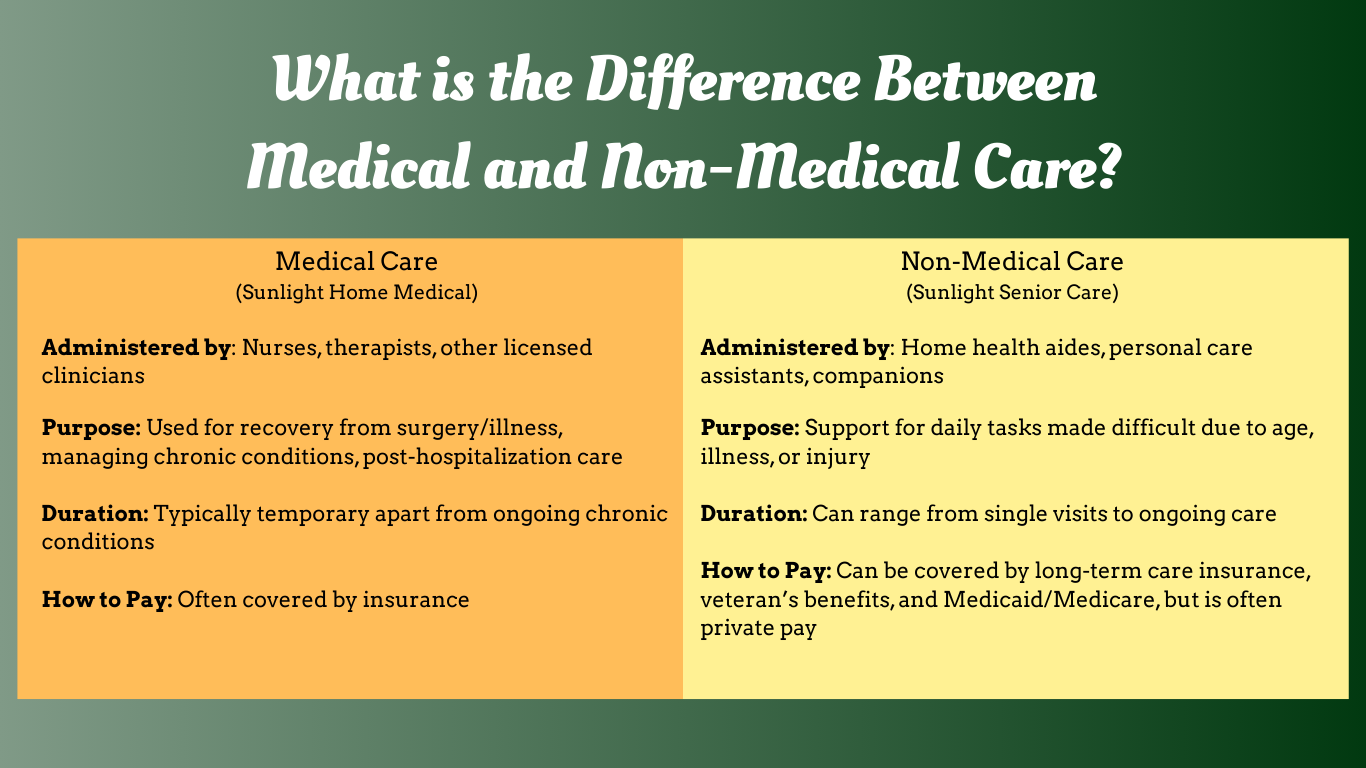
Administered By
Medical Care: Nurses, therapists, other licensed clinicians
Non-Medical Care: Home health aides, personal care attendants, companions
Purpose
Medical Care: Used for recovery from surgery/illness, managing chronic conditions, post-hospitalization care
Non-Medical Care: Support for daily tasks made difficult due to age, illness, or injury
Duration
Medical Care: Typically temporary apart from ongoing chronic conditions
Non-Medical Care: Can range from single visits to ongoing care
How to Pay
Medical Care: Often covered by insurance
Non-Medical Care: Can be covered by long-term care insurance, veteran’s benefits, and Medicaid/Medicare, but is often private pay
What is Medical Home Care?
Home health includes a wide range of health care services that you can get in your home for an illness or injury to help you get better, maintain your current condition or level of function, or slow your rate of decline. Home health care is usually less expensive, and more convenient, than care you get in a hospital or skilled nursing facility (SNF). Depending on your needs, it can also be just as effective. Sunlight Home Medical Care offers up-to-date medical care in Omaha and Lincoln.
Common Uses for Home Health
Home health is mostly used after a hospitalization due to illness, surgery, or injury. Some of the common scenarios seen in home health come from:
Work accidents
Chronic disease (COPD, heart disease, diabetes)
Post-surgical recovery
Dementia and Alzheimer’s
Stroke recovery
Terminal illness
Requirements for Home Health
In order to use home health services you must receive doctor’s orders for care. The typical requirements for a doctor to sign those orders are:
You must be “homebound”
Part-time or intermittent skilled nursing care
A doctor will determine if you qualify for home health services after a face-to-face assessment.
Home health does not cover:
24-hour care
Meal delivery
Homemaker services unrelated to your plan
Personal care unrelated to your plan
Medical Care Visits
Medical care visits typically go up to 8 hours a day and 28 hours a week, but you qualify for an unlimited number of visits total. The care will end when your condition improves to the point of no longer meeting the requirements.
Visits can look vastly different depending on the care needed. Services provided by home health agencies typically include:
Disease and Symptom Management
Wound Care
Physical Therapy
Occupational Therapy
Speech Therapy
IV Therapy
Post-Surgical Care
Social Work
Medication Management
Vital Sign and Health Monitoring
Patient and Caregiver Education
Because of the variety of services home health provides, that means there is also a range of healthcare professionals typically on staff. You could receive visits from:
Registered Nurses
Licensed Practical Nurses
Physical Therapists
Occupational Therapists
Speech Therapists
Social Workers
Certified Nursing Assistants
What is Non-Medical Home Care?
Non-medical care consists of typical daily activities that an individual cannot complete on their own or without great difficulty. These activities are called activities of daily living (ADLs). Sunlight Senior Care offers high-quality non-medical care for Omaha, Lincoln, and Des Moines.
Non-Medical Care Visits
Non-medical care visits can be scheduled as often as needed, from 24/7 care to occasional respite care. Some of the most common ADLs include:
Bathing
Light Housekeeping
Getting dressed or undressed
Hair Brushing
Organizing
Getting In or Out of Bed
Companionship
Meal Preparation
Tasks can vary based on your needs. At Sunlight Senior Care, we have 3 classes of caregiver that can visit you based on your ADLs:
Companion
Homemaker
Personal Care Attendant
If you still are not sure which care you need, you can reach out to Sunlight and we will answer your questions!